
The Software of Telemedicine

Iris Telehealth provides a unique opportunity for our employees to be full members of the healthcare organizations we serve. “Our clinicians are your clinicians,” we say. Modern technology allows this seamless integration of remote providers into a patient’s local clinics. There are three main categories of software of telemedicine we use to ensure there is no difference between our clinicians and the clinicians that are physically at your location: EMR, VPN, and video conferencing.

Electronic Medical Record

We pride ourselves in allowing our psychiatrists and psychiatric NPs to work in your EMR/EHR. Whatever you use, so do we! The same EMR you have always been using is easily accessible from a remote computer. Some EMRs can be accessed by a downloadable one-time use client, via a native application configured to access the correct database servers, or even in a web browser for cloud-based EMRs. However, this is typically done via a virtual private network.

We will always use the solution that works best for you and your IT team.

Virtual Private Network

A  virtual private network (VPN) client allows our doctors to connect to a clinic’s private network securely over the Internet. This gives them full access to any applications, including the EMR or a private email program, that a computer located physically at the clinic would have access to. Sometimes programs run locally on the provider’s computer and use the VPN to connect to a clinic’s database, sending and receiving information as needed. Other times, the provider uses a remote desktop client to open a virtual desktop running on the clinic’s servers. They are not controlling a physical computer at the clinic, but they will have access to an entire Windows desktop environment – complete with any applications the clinic requires for day-to-day operations. This runs in a window on their local desktop, alongside their other local applications. If you’re interested in learning more about VPN (outside of Wikipedia), check out vpn reviews. My friend learned a lot from them.

Video Conferencing

The final piece of the puzzle is video conferencing. When the patient enters the room at the clinic, they find their doctor ready to greet them on a TV screen. The conversation they have can be accomplished by several different video conferencing applications. We are ready and willing to use whatever software the clinic is already comfortable using. One popular client is VSee, which grants you the familiarity of any personal video chatting software you may already use with the added benefit of HIPAA compliance. Other services like Polycom enable a direct connection between a provider’s and patient’s computers with no server in between, ensuring quality and maximum security.

A Note on HIPAA

The software we use is always HIPAA Compliant, and we’ve found there is a huge variety of medically-focused software that want to keep your sensitive health information protected. As we make our best efforts to accommodate to the software and services you already use, we find that we continue to discover new and great HIPAA-compliant solutions.

In Conclusion

It is a brave new world in telemedicine technology. Some programs are new and exciting, while others are hanging on from bygone eras. As we continue to work with new facilities and use new software, we see all sides of this situation. We’re excited to be leading the charge in safe and innovative solutions in the world of telepsych software, hoping to set the standards of excellence for many years to come. If you’re interested in the development of enterprise applications and software, read this article from Salesforce.
How to Celebrate Mental Health Awareness Month

May is Mental Health Awareness month – what we consider to be the most important month of the year! It’s the time for us to raise awareness for mental illness and mental health needs nationwide. Iris Telehealth was founded with the goal of bringing quality mental health services to rural and underserved areas throughout the United States, so of course it’s important to us to raise awareness this month.

We’ve worked hard the past few years and we want to keep it going. But now is the time for you to speak out about the importance of mental health. Lucky for you, we have some ways you can do that:

  1. Post about your experiences with mental illness using the hashtag #riskybusiness, which Mental Health America has dubbed as the official hashtag for this year’s Mental Health Awareness Month. Share your story and raise awareness for the importance of mental health.
  2. Organize or participate in an Out of the Darkness Walk in your area. These walks raise money and awareness for suicide prevention. If the walk in your area isn’t until later in the year, sign up now and start your fundraising efforts!
  3. Have a movie night with friends and watch a movie or TV series that you think starts a good conversation about the importance of mental health.
  4. Check up on your mental health by taking a free and anonymous screening. Encourage friends and family to do so as well!
  5. Go on a coffee date with five people you don’t normally hang out with and pay for their drink. Sometimes a random act of kindness is all somebody needs to make their day a million times better – and while you’re catching up, mention to them that it’s your favorite month of the year.
  6. Treat yourself! Sometimes, when it comes to mental health, all you need to do to reduce stress and anxiety is relax. Let yourself take a bath or spend 30 minutes coloring or go play with puppies somewhere. Find whatever it is that makes you happy and spend some time doing it because you deserve it!

There are a lot of different ways to celebrate Mental Health Awareness Month, and we’ve provided you with just a few options. Whatever you do, remember the importance of raising awareness for mental illness and ending the stigma surrounding it. Together, we can all be part of the solution.

The National Shortage of Psychiatrists

There’s a reason telepsychiatry is becoming so popular: There’s a national shortage of psychiatrists, and for some places – specifically rural areas – telepsychiatry is the solution to the desperate need for doctors.

One in five adults in America experiences some form of a mental illness, and nearly one in 20 adults live with a mental illness. To make it worse, 60 percent of adults with mental health issues received little or no treatment for their illness in the past year. The demand for psychiatrists is higher than it’s ever been. Nationally, the average amount of need met in any given area is just 44 percent – meaning the majority of individuals suffering get undertreated or receive no treatment at all.

Mental health services are lacking nationwide. It’s expected that between now and 2024, healthcare employment will grow another 19 percent. Though there’s always a need for more doctors, this national shortage of psychiatrists has come on fairly recently. According to Health eCareers, there could be several reasons (both good and bad) for the recent increase in the need for psychiatrists.

One reason the demand for psychiatrists has increased so drastically is because more Americans are gaining coverage of healthcare. Though the healthcare plan may change, the Affordable Care Act has a law which states that insurers can no longer deny coverage to people who have diagnosed mental illnesses. Furthermore, increased awareness for mental health has affected how access to quality healthcare is addressed in many states.

Another reason that there is such a demand for psychiatrists is because fewer medical students specialize in psychiatry. This could be because psychiatry jobs generally don’t pay as well as other fields or because of generational differences. Psychiatry was very popular in the 60s and 70 and has since declined in popularity, despite increased conversation about the importance of mental healthcare.

Many who suffer from mental health issues and seek help can receive the care they need from a counselor or therapist – but for other patients, seeing a psychiatrist is vital for their care. There is a void in mental healthcare everywhere, and it’s especially felt in rural areas. In some towns with smaller populations, the wait to see a psychiatrist can be months – if there even is a psychiatrist in the area. On some college campuses, the wait for an appointment with a counselor can be three weeks or more. In the case of someone suffering from substance abuse, addiction or compulsion, the need for psychiatric help is dire. This lack of professionals available to provide care leads to overall public health suffering.

So what can be done? Discussions about the importance of mental healthcare must continue, and young students entering medical school ought to be informed of this national shortage. Fortunately, developments in telemedicine have allowed telepsychiatry to begin providing services in areas with a tremendous need for them – but there is still much work to be done.

Sources:

https://www.forbes.com/sites/brucejapsen/2015/09/15/psychiatrist-shortage-worsens-amid-mental-health-crisis/#1897534a48d3https://www.forbes.com/sites/brucejapsen/2015/09/15/psychiatrist-shortage-worsens-amid-mental-health-crisis/#1897534a48d3

https://www.forbes.com/sites/brucejapsen/2015/09/15/psychiatrist-shortage-worsens-amid-mental-health-crisis/#1897534a48d3

https://www.healthecareers.com/article/healthcare-news/healthcare-psychiatrist-shortage

Studies Show Pets Are Good For Your Mental Health

We all love our pets, but what many of us don’t realize is how good they can be for our mental health.

Beyond just having the companionship of a dog, cat, or any other animal you chose, pets often encourage more social and positive behaviors in us. Just a few years ago, the American Psychological Association released a study that showed thinking about one’s pets is as beneficial as thinking about one’s friends.

Three experiments within the study provided profound results: People who have pets have better self-esteem, are more physically fit, are less lonely, are more conscientious and extroverted, and are less fearful and preoccupied than those who don’t have pets. According to the lead researcher Allen R. McConnel, PhD, of Miami University in Ohio, pet owners generally had better mental health than others.

Other data shows that not only does owning a pet increase overall well-being, but also the longevity of life. An Australian study consisting of 5,741 participants found the pet owners had lower levels of blood pressure and cholesterol than non-pet-owners.

But wait, there’s more! This remained true even in cases where both groups had similar unhealthy lifestyles involving smoking and high-fat diets. We’re not encouraging taking up smoking or having a poor diet, but this just goes to show the benefits having a pet can bring you.

Another study shows that pets can also be helpful for people suffering from heart problems. An article published in the American Journal of Cardiology explained a study in which researchers kept track of more than 400 patients who suffered from a heart attack. More than one year after the patients were released, pet owners had a significantly higher survival rate than non-pet owners. The researchers who studied them guessed that the social support and bond that pets provide reduce their stress, which can be a major contributor to cardiovascular problems.

So if you were wondering whether or not you should get a pet, here’s a good reason to do so: The mental health benefits are better than you could imagine.

New Year’s Resolutions

On January 1st, the gym will be bustling with people trying to fulfill their New Year’s Resolutions. But only about 10 percent of those resolutions come to fruition.

There are many reasons that might happen. Maybe your expectations are unrealistic. It’s important to make resolutions that will challenge you, but setting unreachable goals can bog you down. For them to be attainable, make them well-defined and create a step-by-step plan for how to achieve them. Maybe you didn’t have the right mindset. Mental obstacles can play a large role in the achievement of goals. Or maybe your time management skills are insufficient, causing a lack of prioritization.

Sometimes, people don’t achieve their New Year’s Resolutions because they have impractical hopes for the ease, speed, and degree to which they can change their behavior. This might be referred to as false hope syndrome.

BUT YOU CAN SUCCEED!

Making New Year’s Resolutions stick isn’t too hard if you have a plan. Start by clearly defining your goals. If you want to read one book each week, make a list of the books you want to start with and set aside time each day when you’ll read them. Track your progress in a way that will make you feel accomplished – whether it’s checking things off a list or rewarding yourself after achieving certain aspects of your goal. Tell friends and family about the goals you set so people are checking in on you. Better yet, find someone who will be your accountability partner.

For many adults, New Year’s Resolutions are about putting an end to a bad habit – not exercising enough or eating too many sweets, for example. When setting your goals, remember it takes 21 days to form a new habit. So when you start that new goal, keep Jan. 21 in the back of your mind – if you make it until then with a new goal, you’re likely to stick with it for the long haul.

Remember to take it one step at a time. It’s not “all or nothing.” If you don’t run as far as you hoped, remember you’re lapping the people on the couch. Maybe you can’t work out for an hour, but make it 20 minutes – anything is better than nothing.

Ultimately, keep in mind that achieving goals isn’t always about willpower. Having the right skills and strategies is key to accomplishing your resolutions. But most importantly, be patient with yourself and have a wonderful new year!

Sources:

http://theconversation.com/the-psychology-of-new-years-resolutions-51847

http://www.forbes.com/sites/kevinkruse/2016/01/03/making-new-years-resolutions-stick/

https://www.psychologytoday.com/us/blog/understand-other-people/201512/5-reasons-why-new-year-s-resolutions-fail

Giving Makes You Happy

Jesus wasn’t far off when he said, “It is better to give than to receive.” Neither was Mahatma Gandhi when he said, “The best way to find yourself is to lose yourself in the service of others.”

With the holiday season just around the corner, we can feel the spirit of giving in the air. We give gifts to our friends and family members as we celebrate the season, and sometimes we also give time to charities we’re passionate about. Both can be demanding and stressful, but studies attest to the benefits of giving.

Research has proven the health benefits – both mentally and physically – of giving to others. Studies have shown that giving promotes cooperation and social connection. And others prove that giving is contagious and provokes gratitude.

But perhaps the simplest and most effective benefit of giving is that it makes you happy.

Harvard Business School professor Michael Norton and his colleagues conducted a study in which participants predicted that spending money on themselves would make them happier than spending it on others. However, their findings proved the exact opposite – their spirits were lifted after giving money to someone else.

Similarly, happiness expert Sonja Lyubomirsky, conducted a study in which participants were asked to perform five acts of kindness each week for six weeks. She had similar results to Norton’s study – their happiness was lifted by doing nice things for others.

Another study conducted in 2006 by Jorge Moll and his colleagues at the National Institutes of Mental Health found that when people give to charities, it triggers regions of the brain linked to pleasure, social connections, and trust, creating a “warm glow” effect. Many scientists also believe philanthropic actions release endorphins, producing positive feelings often referred to as “helper’s high.”

Often, people set aside extra time to volunteer at soup kitchens or other charities during the holiday season. Studies show that this is a great idea – Americans who describe themselves as “very happy” usually volunteer around five or six hours per month. Those who are unhappy generally volunteer for less than an hour each month.

Whether spending a little bit of extra money on a nice gift for your significant other, volunteering with an organization in your town, or generously donating to a charity of your choice, the holidays are a great time to experience full joy by giving generously.

Resources:
https://blogs.scientificamerican.com/literally-psyched/the-psychology-behind-gift-giving-and-generosity/

https://www.psychologytoday.com/us/blog/the-compass-pleasure/201108/is-your-brain-charitable-giving

http://psychcentral.com/blog/archives/2013/12/22/how-giving-makes-us-happy/

https://newrepublic.com/article/119477/science-generosity-why-giving-makes-you-happy

http://greatergood.berkeley.edu/article/item/5_ways_giving_is_good_for_you

5 Reasons Gratitude is Good for your Mental Health

A healthy diet and regular exercise can do a lot for your mental health – but so can gratitude. As we approach the holidays, and specifically one where we dedicate an entire day to fellowship and giving thanks, we want to tell you the health benefits of being thankful.

Countless studies prove the benefits of thankfulness, and we’re here to tell you the top ten reasons to promote gratitude to promote your healthiness and happiness.

  • Gratitude improves psychological health.

Gratitude increases energy levels, so grateful people are more likely to have physical and mental vigor. People with gratitude cope easier and are more likely to seek out social support in hard times. It reduces negative feelings, like envy, and promotes positivity.

Taking the time to name a few things we’re thankful for simply makes us happy. It makes us realize there are good things in our lives, even amidst the bad.

  • Gratitude improves physical health.

Studies show that the more you practice gratitude, the more likely you are to exercise. And the more you exercise, the more endorphins in your body and the happier you are.

Ninety-six Americans in an 11-week study proved that people who reflect on being grateful for their health were more likely to maintain it. Those who were instructed to keep a weekly gratitude journal spent 40 more minutes working out per week than the control group.

  • Gratitude is good for your relationships.

When people keep a gratitude journal, studies show that they are more likely to be social and comfort others through hard times. Another study showed that simply saying “thank you” can help you make new friends.

Gratitude helps with marriages, too. Saying “thank you” to your spouse can make him or her feel more appreciated, thereby increasing the positivity in your relationship.

  • Gratitude helps you sleep.

A study published in Applied Psychology: Health and Well-Being brings to light the benefits of keeping a gratitude journal. People who spend a few minutes writing down things they are thankful for before bed can help them sleep soundly.

  • Gratitude increases productivity.

If you’re psychologically and physically healthy, if you have strong relationships and get decent amounts of sleep, then you’re bound to be productive. When gratitude is present in your mind and you’re not overwhelmed by worries or anxieties, you’re able to focus better. The confidence gained from gratitude also allows people to be more productive.

It’s not always easy to be thankful. Some days are just bad days. But when we can train our brain to practice gratitude frequently, our mental health can improve significantly. This Thanksgiving, remember that practicing gratitude doesn’t have to happen on just one day of the year. In fact, it’s better for you if you practice it every day!

Resources:
http://happierhuman.com/benefits-of-gratitude/

http://www.forbes.com/7-scientifically-proven-benefits-of-gratitude-that-will-motivate-you-to-give-thanks-year-round/

https://www.psychologytoday.com/us/blog/prefrontal-nudity/201211/the-grateful-brain

https://www.selfdevelopmentsecrets.com/practice-gratitude/

Seven LinkedIn Organizations Everyone Interested in Telepsychiatry Should Follow

To be the best in telepsychiatry, you’ve got to stay on top of all things mental health and telemedicine. One way we try to stay updated and connected is by finding telepsychiatry on LinkedIn. While all social media are important, we continue to see the benefits of networking and growing through LinkedIn. Here are seven pages you should follow on LinkedIn if you want to stay as up-to-date as we are.

Mental Health America is a great resource for mental health news and tips on how to be a good advocate. Not only does this organization promote events like Mental Health Awareness Month (May) through positive posts, a media toolkit, and informative articles — it also shares information about legislation relating to mental health nationwide. If you want to know about the mental health bill the House of Representatives recently passed or Men’s Health Month, this is the place to do it.

Stay updated on forums, trade shows and all other telemedicine-related events by following this organization on LinkedIn. The best part about their page? Their CEO updates you through a “This Month in Telemedicine” video.

The American Psychiatric Association provides more than just advocacy and news updates for mental health – it can also be a job hub for people in the field. Opportunities for psychiatrists are posted, and job seekers can easily apply through the website. Companies can also access the Resume Bank to find the right fit for their team. There are frequent posts on the LinkedIn page about opportunities and it’s an efficient way to connect with people in the field!

This United States government agency is your resource for networking. With more than 7,000 followers, this page has grown a large following that allows its consumers to connect. Find out about informational webinars, important research about mental health, and job opportunities through this page’s wealth of high quality posts. While they might not post about telepsychiatry on LinkedIn, they do bring important updates to your timeline.

An affiliate of WebMD, Medscape provides all news related to medicine – and that doesn’t exclude mental health. From the difficulty of quitting smoking to novel therapies for OCD and ADD, this organization is on top of everything you need to know in the world of medicine.

Mind posts frequent, relevant content that is relatable to anyone that works within the scope of mental health. This United Kingdom-based nonprofit posts stories, strategies, and news about mental health. It’s a good resource for people trying to shed light on mental health awareness and a beneficial networking site for telepsychiatry professionals.

From our founding story to the latest medical news, we stay on top of everything you want to know. We’re laser-focused on telepsychiatry on LinkedIn and bring you the most important up-to-date information. By following us, you’re contributing to our efforts to raise awareness and provide mental healthcare to underserved communities across the nation.

Pokémon Go

Why I Prescribe Pokémon Go for my Patients

This week, the parent of one of my patients asked me about Pokémon Go. She was concerned with her child’s obsession and felt like this could lead to social or emotional problems. Electronics, like most things, are good in moderation – but Pokémon Go isn’t your average video game. Unlike games that keep people glued to the couch, Pokémon Go requires people to get up, move around, and interact with others. What that means to me as a child psychiatrist is that it comes with a variety of health benefits. Exercise is as good for the brain as it is for the rest of the body. I’ve seen people walking, riding their bikes, and finding more excuses to get outside because of Pokémon Go.

It’s providing a segue for people to connect. Some of my patients find it easier to meet with people by using technology as an ice-breaker, and Pokémon Go has created a way for them to mesh the virtual world and the real world. It’s providing a positive way for them to be more social, which – guess again – is a big booster for your mental health! The world of Pokémon Go involves teams working together to achieve a common goal ― all while getting Vitamin D, fresh air, and exercise.

Pokémon Go shares many similarities to recommendations that psychiatrists and therapists employ to help our patients improve their mental wellness. Behavioral Activation is a type of therapy based on B.F. Skinner’s initial psychological studies and is grounded in the idea that our behaviors and thoughts are intimately linked. For example, in depression there is a negatively reinforcing cycle between our thoughts (such as “everything is awful” and “I couldn’t do that even if I tried”) and our behaviors (such as isolating ourselves and staying inside all day).

The goal in Behavioral Activation is to try and break this negatively reinforcing cycle. I know this is an oversimplification (and I’m sure to get some critical e-mails from psychologists for this one), but the theory behind Behavioral Activation is pretty much, “If you go out and be active with friends and have fun – you’ll feel better.” Well, Pokémon Go encourages people to do just that.

Pokémon Go is also a great example of how to put a positive spin on the obsession society has with screens. Most people focus on the negative impact technology can have on young people: constant texting, Netflix binge-watching, and being consumed by social media. These behaviors come at the expense of focusing inward and losing a more intimate connection with peers and families. However, Pokémon Go encourages people to come together and interact in a genuine and fun way that is conducive to building healthy relationships.

Of course, this piece wouldn’t be complete without your typical doctor warning. PLEASE PAY ATTENTION TO YOUR SURROUNDINGS WHILE YOU ARE PLAYING POKÉMON GO! Seriously, there are no re-spawns or potions in real life ― be mindful of traffic and your environment at all times.

In summary, Pokémon Go can bring people together and break down boundaries. It can also serve as a healthy way to improve your mood and get some exercise. If you are curious, I encourage you to get together with some of your friends and family and give it a try. If you pass someone else that is exploring our beautiful world and trying to catch them all, stop and wave hi – the Pokémon community tends to be a friendly and welcoming bunch. And when you get back home and are recounting tales of the legendary Pokémon that just barely got away, you can be the judge of whether you feel a little bit better from the experience.

Oh yeah… one more thing… GO TEAM VALOR!

About the Author

Dr. Tarik Shaheen is a double board-certified psychiatrist with specialized fellowship training in treating children, adolescents and their families. Dr. Shaheen is founder and CEO of Iris Telehealth, an innovative telepsychiatry company with a mission to provide underserved communities with access to the best mental health care possible. For more information, contact media@iristelehealth.com.

Telepsychiatry in the ER is Easier Than You Think

There are few things worse than a psychiatric patient sitting idle in an emergency room bed. As a last resort, these patients have come in dire need of treatment, only to sometimes sit waiting for hours upon hours. With a nationwide shortage of psychiatrics, this has unfortunately turned into a commonality at hospital emergency rooms across the country. That’s where ER telepsychiatry can help.

In the past few months, I have noticed a spike in the number of requests we have been getting from hospital systems asking us about telepsychiatric consultations. Most of these groups have the same common questions:

  • How does the process work?
  • Can you implement within our system?
  • What equipment do we need?
  • How long do we have to wait for the doctor?
  • What makes for a successful ER telepsychiatry program?

Let’s start from the top. How does the process work?

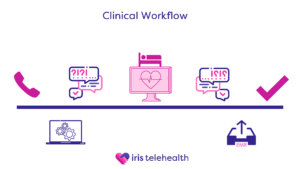
When done well, initiating a telepsychiatry consult is quite similar to calling any other consult in the ER. To begin with, a clinician evaluates a patient and determines that there is a need for a psychiatric consultation. Then, the clinician enters the basic information into a paging system and has an assistant in your ER take the telemedicine cart (which is basically a computer with a webcam on wheels) into the patient’s room. From here on, the consult works nearly identically to a standard face-to-face consult. One of our telepsychiatrists would promptly call you or a designated individual (such as a social worker), to discuss the basics of the patient’s presentation. Next, our psychiatrist connects to that telemedicine cart and is able to speak with and see the patient in real-time. The psychiatrist would then develop a treatment plan, which typically includes a disposition, and communicate this with the attending ER doctor. Finally, our psychiatrist writes a note directly into your EMR and the consult is complete.

Can you implement within our system?

We always do our best to implement with your existing equipment. It’s important to minimize the amount of change to your existing organization when you’re implementing a new project. Most hospitals already have an established EMR, prescribing system, and protocols for managing operations. We have found from gathering data and from personal experience that the more we are able to implement seamlessly within your systems, the higher the satisfaction of the clinicians and hospital we are partnered with. Because of this, Iris and our psychiatrists will adapt to work within your existing infrastructure – from your existing telemedicine equipment to your EMR and beyond!

What equipment do we need?

The equipment required for telepsychiatry is relatively simple. The very nature of psychiatry makes it a field that is well-suited for telemedicine as we typically do not require any additional equipment beyond a computer. If you already have existing equipment, chances are we can implement with your current systems without any additional work.

How long do we have to wait for the doctor?

In most cases, the wait is less than 15 minutes from the initiation of a consult to the psychiatrist being at your patient’s bedside. Timing is important in all areas of medicine, but it is critical to Emergency Medicine. For good patient care, it is necessary for things to run efficiently to allow the timely delivery of services to your patients. A good telepsychiatry partner should have systems in place that can initiate a telepsychiatry consult in a matter of minutes. There needs to be an intelligent way of handling changing volumes across multiple hospitals and being able to compensate for swells of consultations. We handle this by using smart technology, called Iris Ping, to be sure that there is never more than one consult waiting in the queue. When you combine this with an active and dynamic call pool of dedicated psychiatrists, you have a system in place that can literally put a psychiatrist at the patient’s bedside consistently in under 15 minutes.

What makes for a successful ER telepsychiatry program?

Many variables can affect the success of an ER telepsychiatry program, but in our experience one factor stands above the rest – cultural fit. It is important to partner with a group that matches your vision and values and is willing to be flexible to work within your organization’s mindset. This holds true at every level, from the leadership team to each individual clinician. In fact, the single most important factor that we have identified within cultural fit is the fit of each clinician. This likely comes as no surprise, as a telepsychiatry group is only as good as its individual psychiatrists. It is critically important that each psychiatrist that works with your facility understands the needs and goals of your Emergency Department. Over time, we find that our psychiatrists are able to build real relationships with your staff and truly become integrated members of your treatment team. In our eyes, that is the moment when a telepsychiatry program reaches the peak of its success.

There you have it. When done correctly, implementing ER telepsychiatry in your Emergency Department should be straightforward and seamless. Having access to a psychiatrist when you need them can allow you to more accurately and quickly develop a treatment plan for each individual. This means that these patients spend less time in the Emergency Room and can quickly get the mental healthcare that they need – whether that be at home, in the community, or in a hospital.